
AN UNFINISHED STUDY OF TEN THOUSAND LEAVES
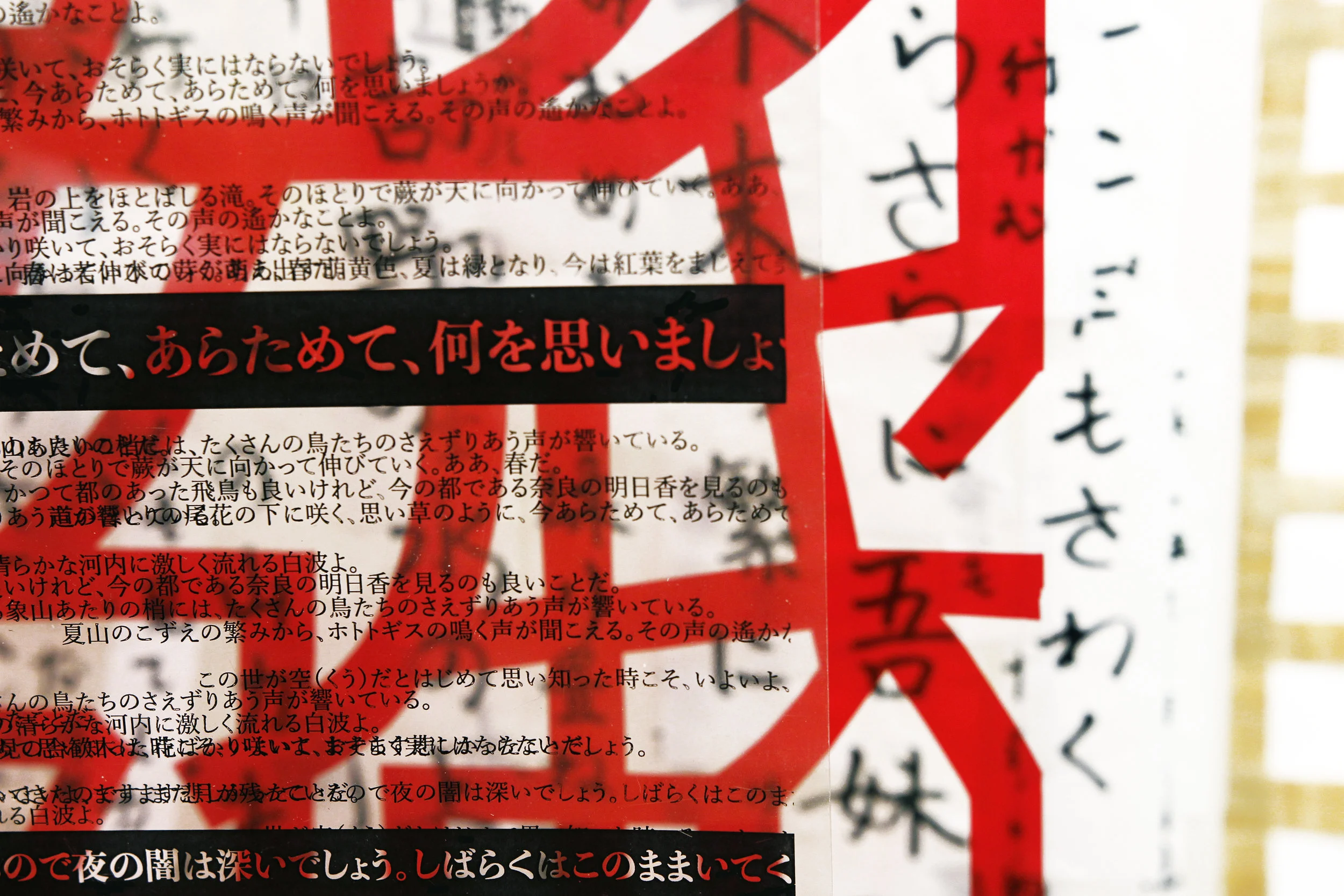
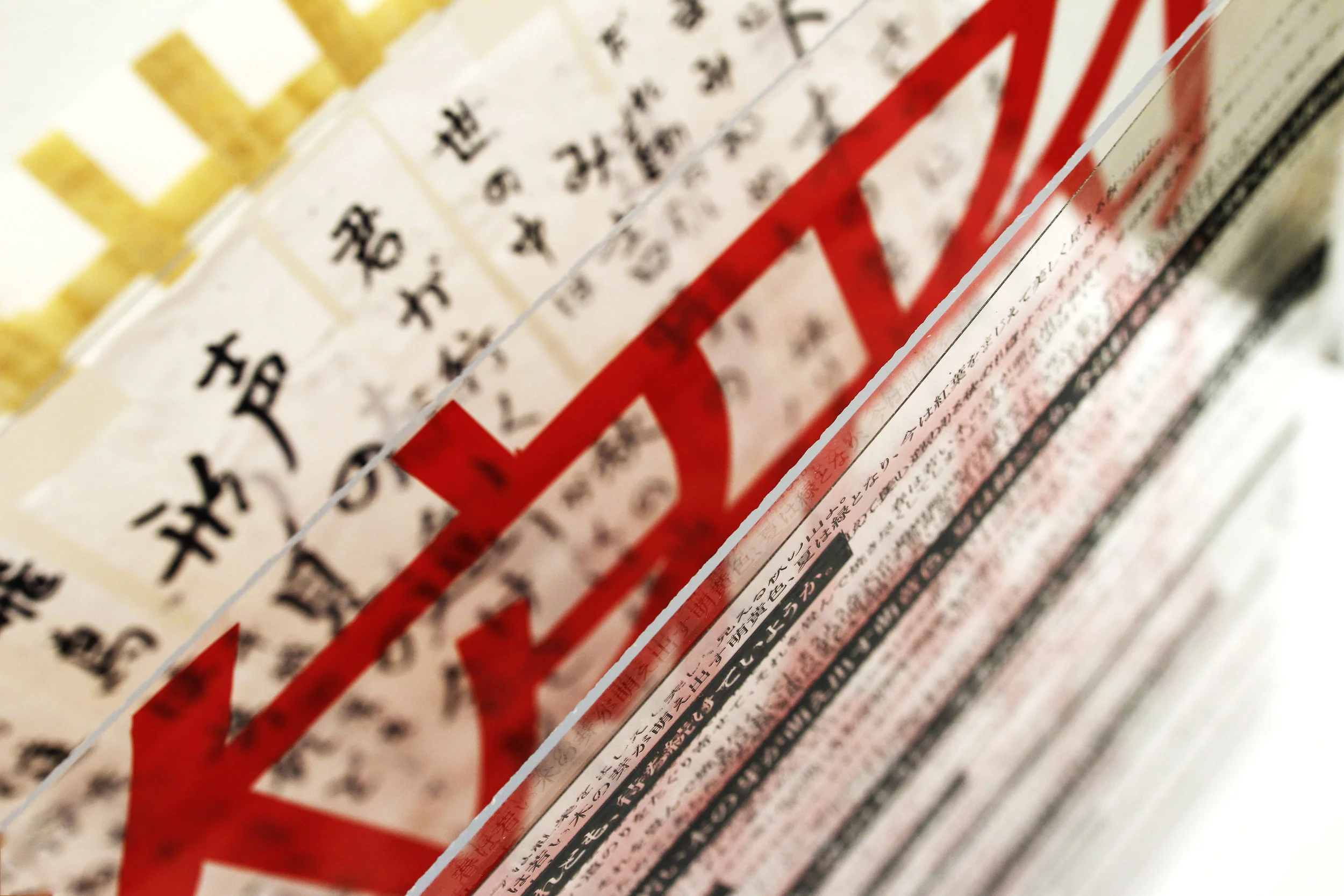
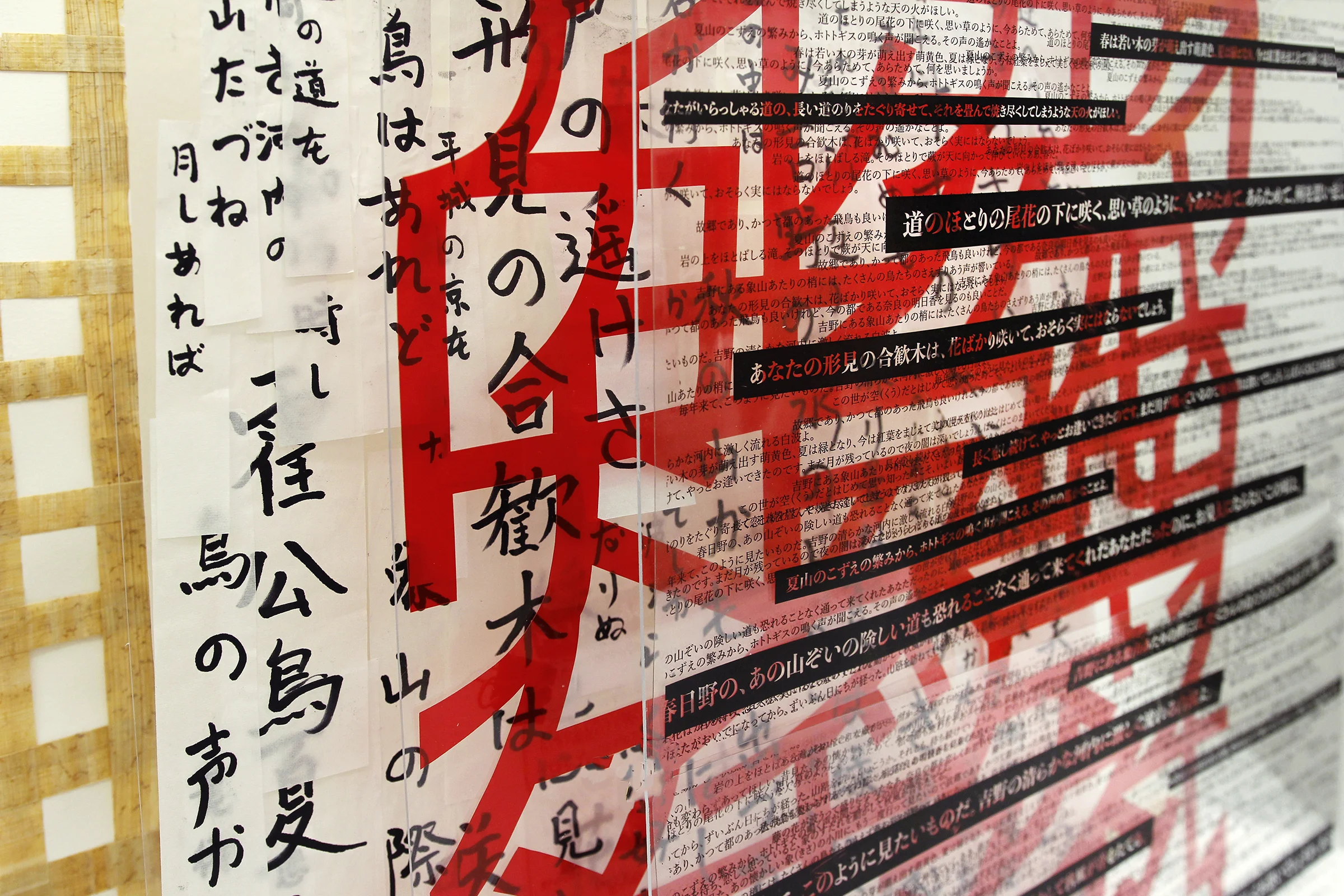
This project is a reflection of the study of Japanese poetry Manyoshu (万葉集). In Japanese, the character “葉” means both leaves and words. Another explanation of the book can be Collection of Countless Words. Through the process of language learning, I keep exploring where it has existed in the history.
Language is a conveyer of culture. It reviews the change of city and life. We were not born the way we are now. It is the accumulation of the past that has made us today. The past is the ground, just like the fallen leaves breeding the soil. Whether we realize or not, it is always a part of us.
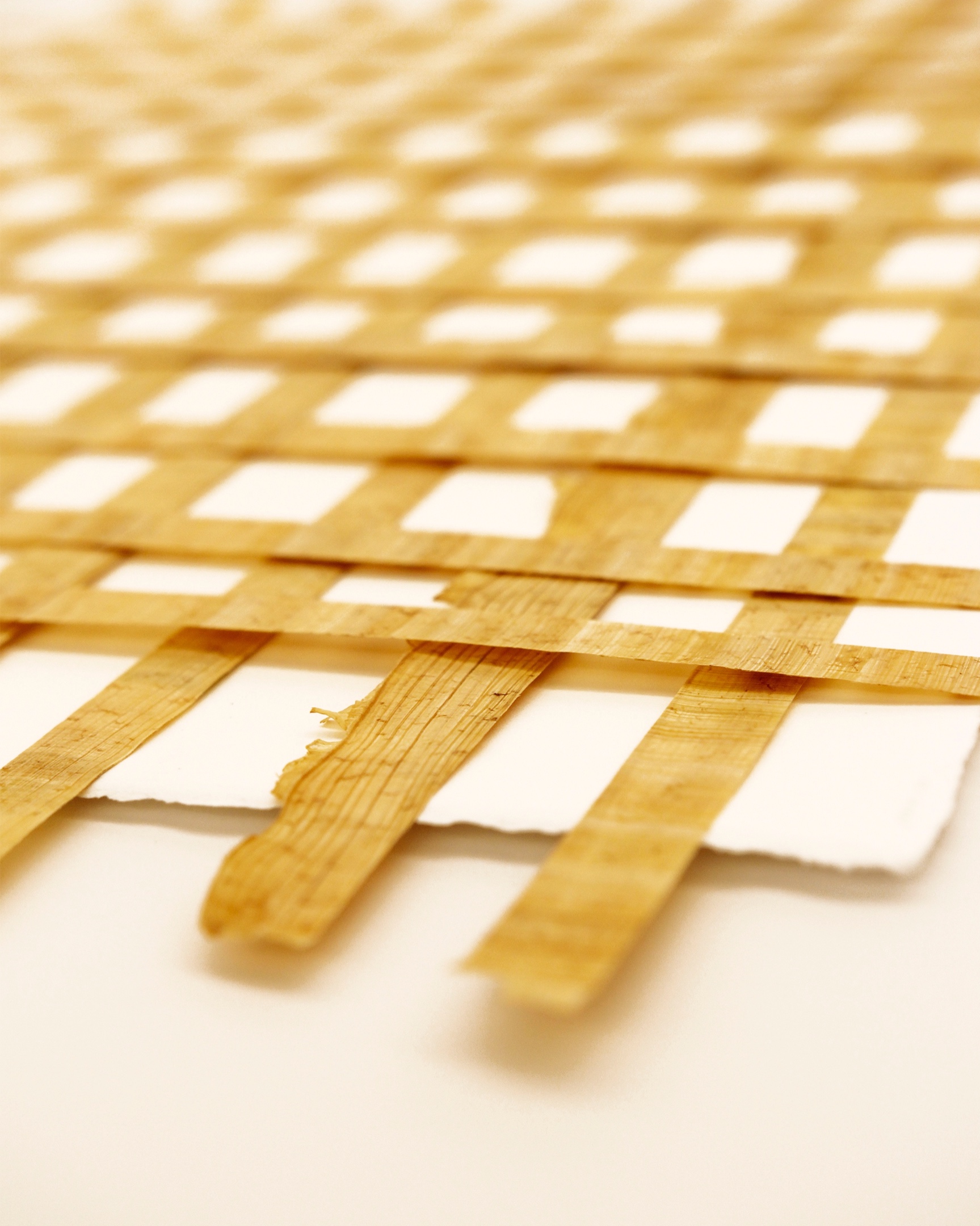
The background layer is made up of cotton paper and bamboo textured paper on top. Cotton and bamboo both have significant influences in the East Asian history. Cotton is the very original material of textile. Before paper was ever invented, people carved into wood or bamboo as a method of record keeping. In addition, bamboo is also an important material of traditional Japanese craft. The long fiber allows crafts-men to make strong and beautiful artworks. These two materials construct the basic structure of life.
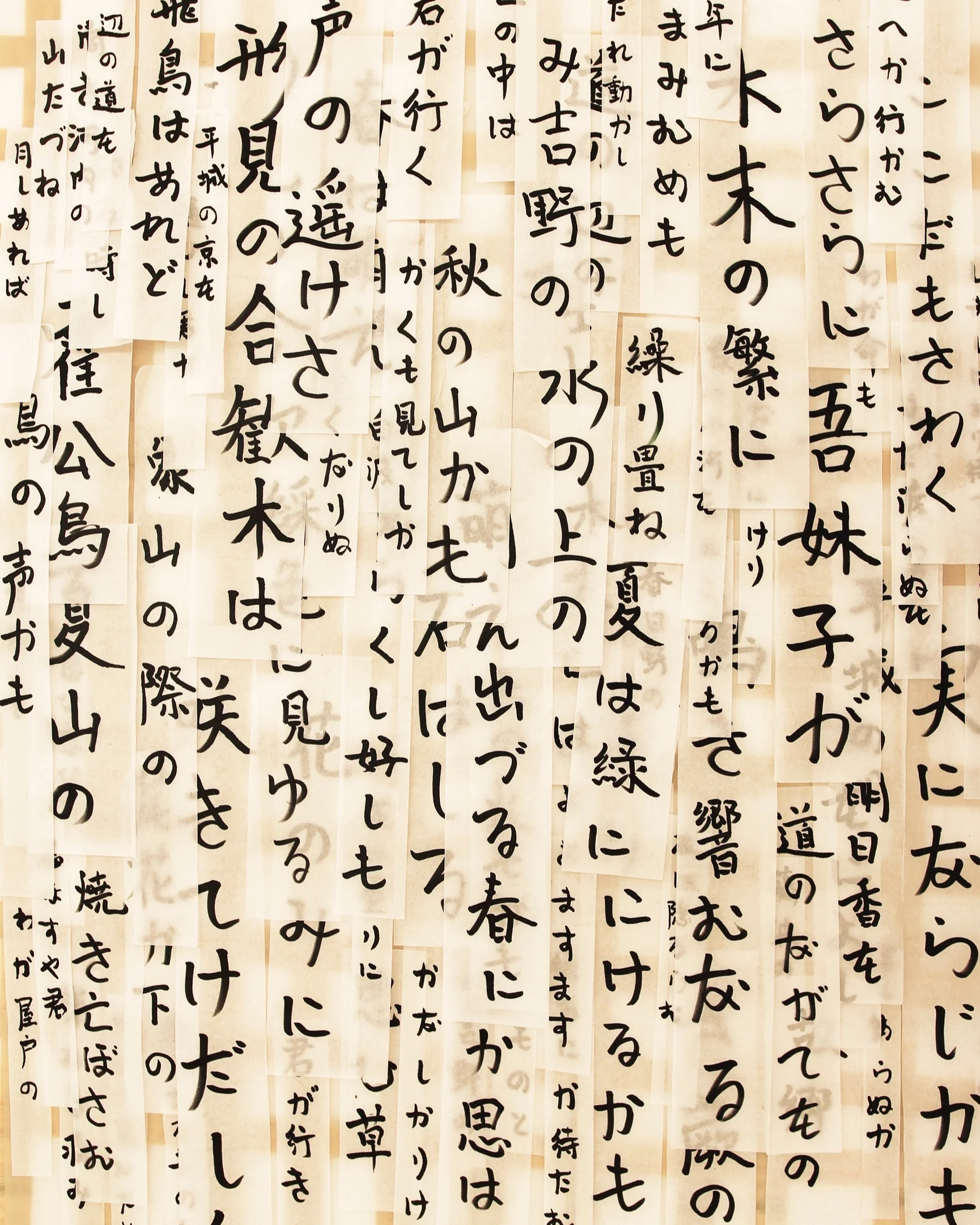
Above the background, you can see a lot of stripes of calligraphy written in vertical direction. Inherited from China, Japanese keep the writing habit from top right to bottom left. The calligraphy on rice paper, as a metaphor of “leaves” in the book title, are spread all over the sheet just like the language being used from day to day. The life of leaves does not end when they fall onto the ground. Instead, they nurture the soil and breed new lives. Languages and cultures are passed onto descendants intangibly.
In the collection, the writers range from emperors to authors to common people. Language has truly become a reflection of the ethnic group.
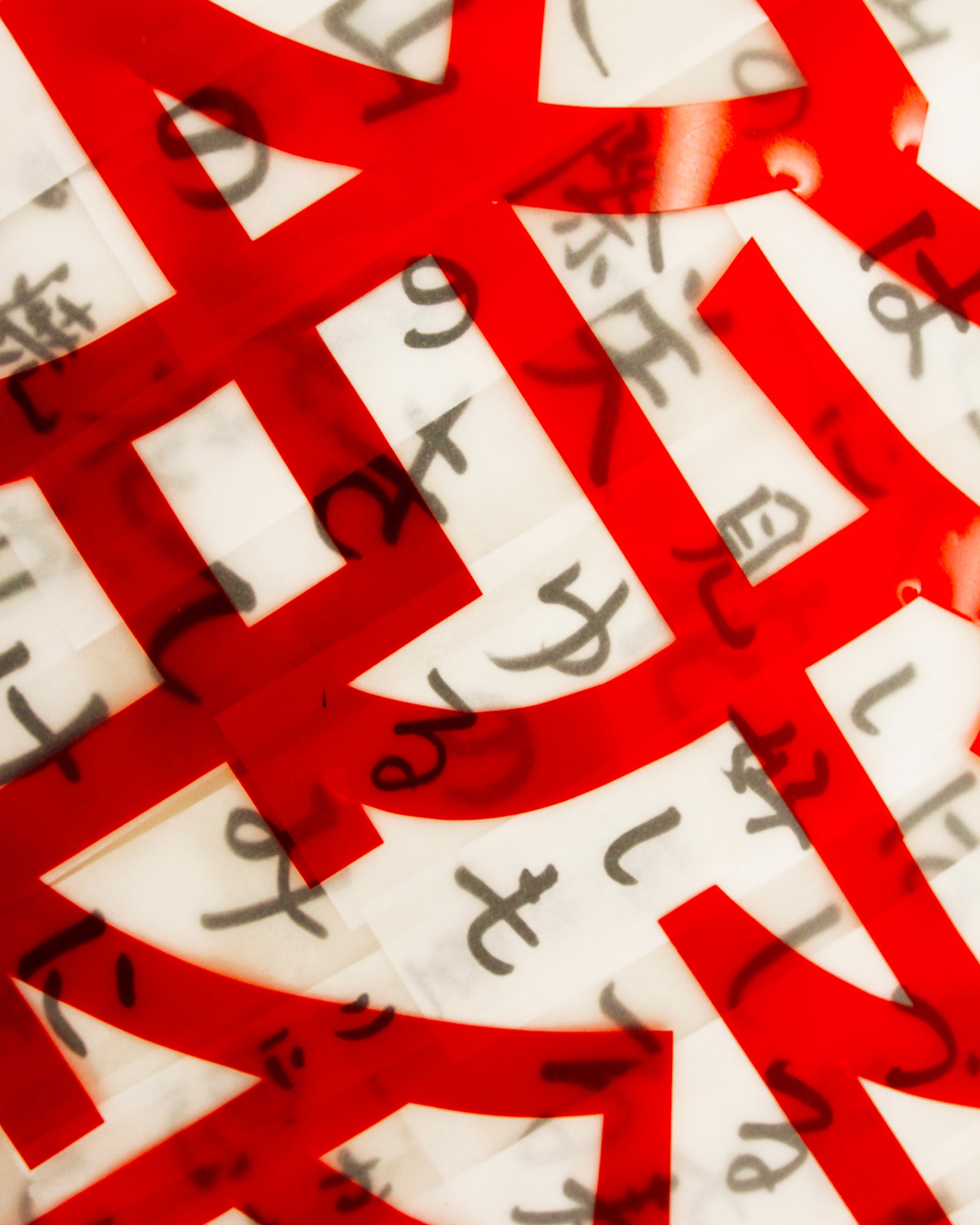
The next layer is an abstract map made up of Katakana, one the the Japanese alphabets which is mainly used for translating foreign languages. With the development of modernity, Western culture has aggressively entered the Japanese market. Industry heavily took place. The other alphabet Katakana has never been used than before. Made into one whole piece and cut by hand, the geometric shapes in the color red symbolize the blood vessels of the city, as Westernization promotes urban progress.
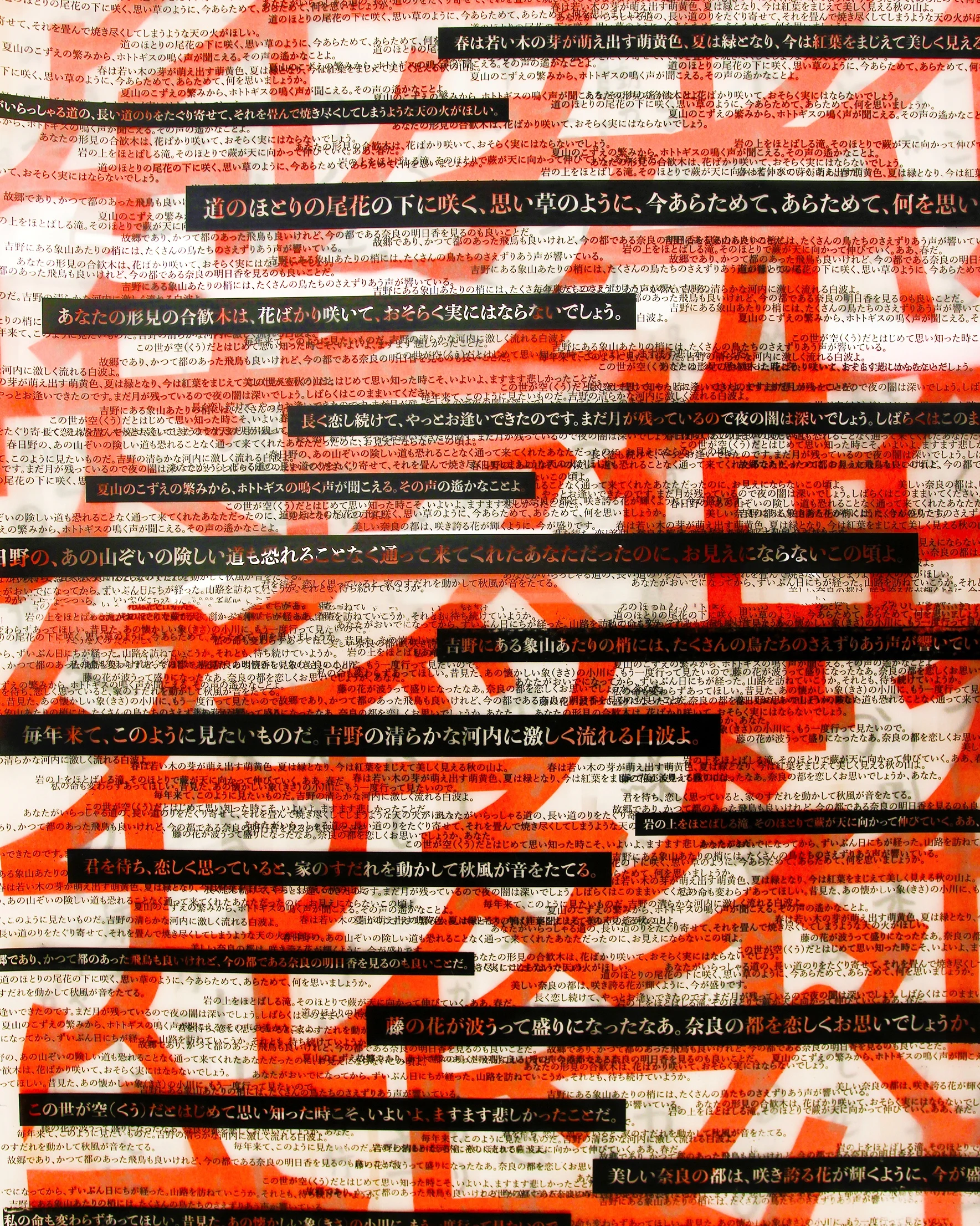
The top transparent layer, which represents the current, is fully occupied by the modern Japanese translation of the poetry laid in a horizontal way. Languages exist in a brand new form. In a cyber century, we cannot really see or touch the information. Internet culture has greatly changed the reading of language. Vertical order has become horizontal. Words get to spread around widely beyond our imagination. We are drawn in the endless invisible vortex. What remains the same is seasons, the emotions and the universal meaning behind the poetries.